The AFRETEC Makerthon 2026 officially opened on 16 March 2026 at the University of Nairobi’s C4DLab, setting the stage for a week of intensive, solution-driven innovation. The Makerthon convenes student teams from across Africa and partner institutions, providing a structured platform to translate ideas into practical, scalable solutions.
The opening session, led by University leadership, emphasized the institution’s commitment to advancing research, innovation, and enterprise. Speakers highlighted the importance of university-led ecosystems in nurturing talent, strengthening industry linkages, and enabling student innovators to develop solutions that respond to real societal and market needs. The official opening underscored a clear expectation: innovation must move beyond ideation to tangible impact.
A distinguishing feature of this Makerthon is its continuity. Teams were formed prior to arrival and had already been collaborating virtually. This early engagement enabled participants to move quickly into deep, focused work upon arrival. Following the program overview, teams reconvened and immediately began refining their concepts by internalizing key principles introduced during the morning sessions.
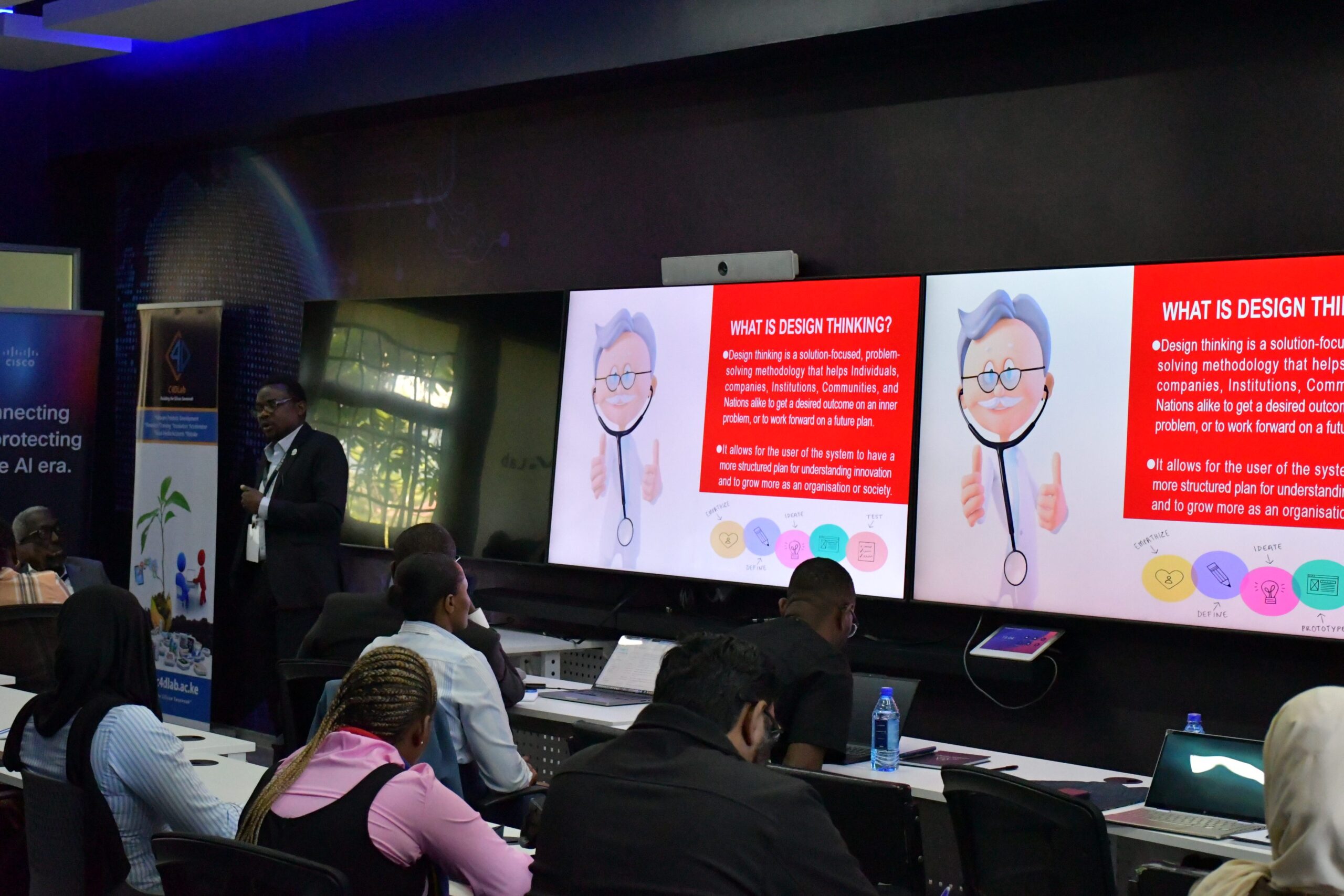
Central to Day One was the application of design thinking, particularly the role of empathy in innovation. Through guided sessions, participants were challenged to critically examine user contexts, validate assumptions, and ensure that their solutions are grounded in real needs. Teams translated these insights directly into their ongoing work, strengthening the relevance and clarity of their problem spaces.
The afternoon session on defining the problem reinforced this foundation. Participants were guided to articulate precise, evidence-based problem statements aligned with industry realities. This deliberate focus mirrors leading global makerthons, where the first day is dedicated to establishing a strong problem-solution fit before advancing to prototyping and development.
Throughout the day, teams engaged in iterative working sessions supported by continuous feedback from coaches and mentors. This structured approach—combining pre-formed teams, design thinking, and real-time expert input—ensured a high level of productivity and alignment from the outset.
Day One concluded with a reflection and forward outlook, positioning teams to transition into prototyping and solution development in the days ahead.
The opening day at C4DLab reflects the essence of a mature innovation ecosystem: preparation, collaboration, and disciplined execution. As the Makerthon progresses, the focus will remain on developing solutions that are not only technically sound, but also viable, scalable, and impactful within real-world contexts.